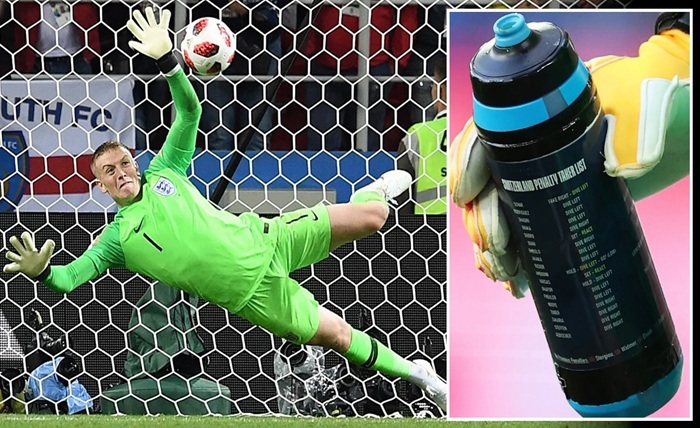
Across the 2024/25 domestic league season, penalties remained relatively rare on a per‑match basis, but their distribution across teams and competitions was far from even. A small group of clubs repeatedly appeared at the centre of spot‑kick decisions—either winning or conceding them at high rates—creating identifiable trends that bettors could factor into goal, scorer and prop markets.
Why it makes sense to track penalties team by team
The logic for tracking penalties at team level is simple: spot‑kicks are high‑value scoring chances, and teams that consistently attack or defend in certain ways alter the likelihood of those events. Clubs that spend more time in the opposition box, dribble in tight spaces and cross frequently tend to draw more fouls and handballs, while sides that defend deep under pressure or tackle aggressively in the area face higher concession risk. Over a full season, those structural differences create repeatable patterns that push some teams’ matches above league‑average penalty rates, which can be turned into informed expectations rather than assumptions that every fixture shares the same spot‑kick probability.
Overall 2024/25 penalty volume and league-level tendencies
Looking across the major European leagues in 2024/25, the total number of penalties and their conversion rates varied between competitions, reflecting both officiating standards and tactical styles. One cross‑league analysis reported that La Liga registered around 130 penalties, the highest among seven tracked competitions, while the Eredivisie and Bundesliga recorded the fewest with 72 and 78 respectively, partly because they played fewer rounds. In the Premier League, Transfermarkt data showed 69 penalties in the first 260 matches—roughly 0.27 per game—which sits close to the broader modern norm of about one penalty every three to four fixtures. For bettors, this baseline matters because any individual team trend must be evaluated against a league context where VAR and evolving handball interpretations slightly increased the long‑run frequency of spot‑kicks, but not to the point where they became routine events.
Teams that consistently won the most penalties in 2024/25
Within that league framework, a handful of clubs stood out for how often referees pointed to the spot in their favour. Across Europe’s top five leagues, Real Madrid led the field by winning 11 La Liga penalties according to StatMuse, while other sources tracking all competitions put their total spot‑kicks even higher, underlining how frequently their forwards entered and were fouled inside the box. A broader cross‑league study identified Real Madrid with 14 penalties received, followed closely by Sporting Lisbon with 13 and Benfica with 12, while Liverpool also featured prominently at domestic level, recording the highest number of penalties in the 2024/25 Premier League with nine spot‑kick goals.
Which teams conceded penalties most often
On the other side of the equation, certain clubs found themselves repeatedly punished from the spot, highlighting defensive patterns that exposed them more than typical league rivals. The same multi‑league analysis that flagged Real Madrid’s offensive penalty numbers also identified Saint‑Étienne as the team that conceded the most penalties, with 15 awarded against them over the season—an indicator of either sustained defensive pressure, clumsy challenges, or both. Alavés, Venezia, Nacional and Brest each conceded double‑digit penalties, suggesting that their defensive structures invited frequent contact and last‑ditch interventions in and around the area, often in matches where they were already under significant territorial or possession pressure. For serious bettors, these concession trends pointed to teams whose game states and defending styles pushed their matches toward higher‑than‑average penalty risk, particularly when facing attack‑heavy opponents already adept at drawing spot‑kicks.
Mechanisms that link playing style to penalty volume
The mechanism tying style of play to penalty frequency runs through where and how teams choose to contest the ball. High‑possession, front‑foot teams that flood the box with runners and quick passes create repeated moments of decision for defenders—whether to step in, block, or hold position—raising the chance of mistimed tackles and handball incidents that turn into penalties. Conversely, deep‑sitting defences that spend long periods in their own area absorb waves of crosses and shots, increasing the number of blocks and last‑second challenges they must attempt, and over a 38‑match campaign that volume alone makes it more likely that some contacts will be judged as fouls or handballs under VAR‑assisted scrutiny.
Net penalties: teams that gained most from the spot
Beyond raw counts of penalties for or against, net penalty balance—awarded minus conceded—offers a cleaner view of which clubs extracted the greatest overall advantage from spot‑kicks. The 2024/25 cross‑league study reported that Real Madrid posted a +11 net penalty figure, having won 14 and conceded only three, while Sporting Lisbon came next with a +9 balance after receiving 13 and giving away four. Benfica, Bayern Munich and Liverpool also featured near the top of this metric, with net totals of +8 and +7 respectively, illustrating that their attacking penalty gains were not cancelled out by frequent concessions at the other end. For bettors, these net figures helped distinguish between teams whose penalty numbers simply reflected chaotic matches and those where spot‑kicks consistently tilted expected and actual goal difference in their favour.
How UFABET fits into tracking penalty-related angles
In seasons where penalty trends clearly favour certain clubs, bettors who want to treat spot‑kicks as a repeatable angle need a way to connect raw statistics with actual pricing on goal, scorer and prop markets across multiple competitions. That process usually starts with a database of which teams win and concede penalties most often, then extends to checking whether bookmakers have fully priced in those tendencies or still leave small gaps in odds around anytime scorers who take penalties, total‑goals lines and “penalty awarded” markets. When that kind of structured monitoring stretches across several leagues and time slots, using ยูฟ่า สล็อต 168 as a betting platform gives bettors a central place to observe how odds on penalty‑sensitive markets move as line‑ups, VAR narratives and recent penalty streaks enter the public consciousness, and to judge whether the numbers still reflect underlying patterns or have drifted into overreaction territory.
VAR’s contribution to modern penalty patterns
The introduction and entrenchment of VAR changed how penalties are both identified and perceived across modern seasons, including 2024/25. Studies of post‑VAR Premier League campaigns showed that the average number of penalties per season increased compared with pre‑VAR eras, with one analysis reporting a rise from around 95 to more than 104 penalties per season, driven in part by more frequent reviews of potential fouls and handballs in the box. Another study found that both home and away teams saw slight, though not always statistically significant, increases in mean penalties awarded per match after VAR, suggesting that video review broadened referees’ willingness to penalise incidents that might previously have been missed or judged too marginal in real time. For bettors, the impact was twofold: spot‑kick frequency crept up, and a larger share of penalties involved VAR intervention, which introduced both longer in‑match pauses and more pronounced swings in live goal and totals markets whenever the referee headed to the monitor.
Using casino online within a penalty-focused, data-driven approach
The fact that a few teams repeatedly win or concede penalties can easily tempt bettors into following every social‑media graphic about “team X got another spot‑kick,” especially when wagering is only a few taps away. Without a data‑grounded plan, that usually leads to chasing short streaks—backing penalty takers after every recent award or betting on “penalty in match” props whenever a high‑profile VAR incident trends—rather than evaluating whether the long‑run pattern and current prices justify involvement. Within a more disciplined routine, any casino online website becomes simply the execution point for a checklist: targeting matches where both sides have above‑average penalty involvement, confirming that odds still underestimate that fact relative to league baselines, and recording results across a season to see whether the strategy genuinely outperforms random penalty occurrence.
Summary
The 2024/25 league season confirmed that penalties remain unevenly distributed, with teams such as Real Madrid, Sporting Lisbon, Benfica and Liverpool repeatedly winning spot‑kicks, while clubs like Saint‑Étienne and Alavés found themselves conceding them at unusually high rates. League‑wide numbers showed moderate penalty frequencies—roughly 0.27 per match in the Premier League—with VAR and handball interpretations nudging totals upward without turning every game into a spot‑kick lottery. For serious bettors, the practical edge lies in using these trends to refine expectations about specific teams and fixtures, anchoring them against league averages and market prices, and embedding penalty‑related bets into a structured, testable process rather than reacting to isolated, high‑profile decisions.